



Meetings that do the work
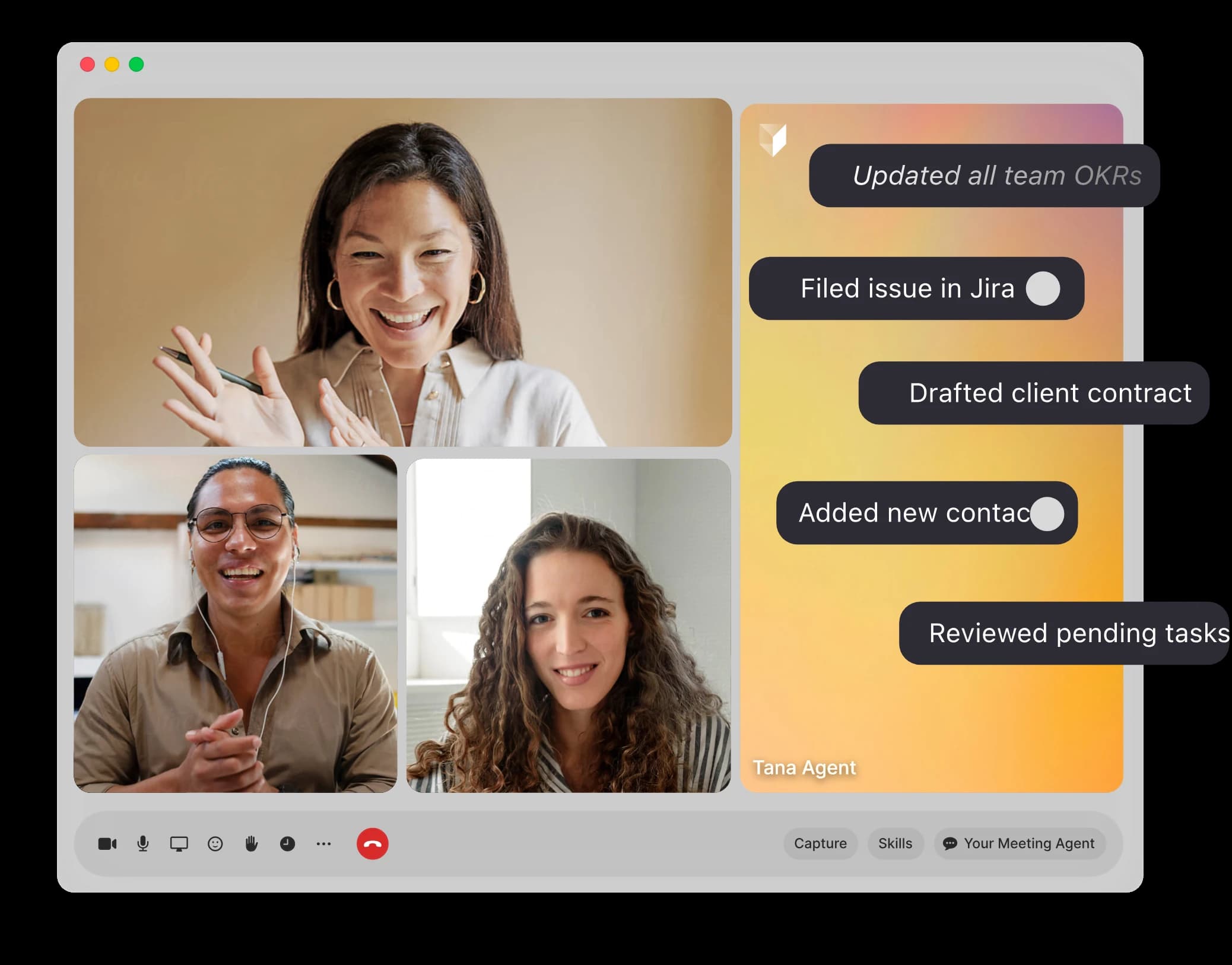
Tana is an agentic meeting platform. AI agents join your video call, follow the conversation, and complete the work you discuss: bugs filed, PRs drafted, decisions logged, follow-ups sent. All by the time the call ends.
What is an agentic meeting?
A video call where AI agents take part as participants, not just recorders. The difference between leaving a meeting with a list of things to do and leaving with them done.
They listen and watch
Agents follow the conversation and everything shared on screen, in real time. No bot to invite, no recorder to start.
They do the work
Ask in chat, or just say it out loud. File the bug, draft the pull request, update the plan, write the follow-up. It happens during the call.
They remember
Every decision feeds your team's shared context, so your agents get sharper with each meeting they sit in. Your fiftieth call is far more useful than your first.

Meetings don't execute. They generate work.
Until now.
Modern teams run on meetings, but meetings separate talking about the work from doing the work. Every call ends with a second to-do list: notes to clean up, tickets to file, follow-ups to send, stakeholders to update.
The real work starts after the meeting, which is where context gets lost and decisions get forgotten. Teams spend the rest of the week catching up on what was already discussed.
We are now entering an era where talking about the work equals doing it. Ironically, that means the most productive part of your day is about to become the meeting itself.
Works with your stack
Agents push finished work into the tools your team already runs on, so it lands where you track it. No copy-paste, no after-meeting cleanup.

Issues, filed
Bugs and tasks land with acceptance criteria and the screen-share screenshot attached.

PRs, drafted
A draft pull request, opened from what the team just agreed to build.

Recaps, sent
The summary and next steps posted to the channel before you leave the call.

CRM, updated
Deal notes, stage changes, and the follow-up email written back as you talk.
From conversation to done
The repeatable meetings teams run every week, finished in the call instead of after it.
Sprint planning
Your standup files the bugs and tasks in Linear or Jira, each with acceptance criteria and the screenshot from the call.
Tickets filedSales call
Deal notes, stage changes, and the follow-up email written back to HubSpot, instead of 20 minutes of manual entry.
CRM updatedCode review
Agree on the change on the call and an agent opens the draft pull request from what you described.
PR draftedClient discovery call
Leaves with the project brief, storyboard, or customer journey drafted, before the client hangs up.
Brief draftedMeeting prep
An agent pulls last week's decisions, open commitments, and attendee context, then pins a brief to the calendar event.
Prepped in advanceDaily agents
Scheduled to mine meetings for follow-ups, refresh your pipeline, and prep tomorrow overnight.
Runs overnightThe easiest way to get your team on AI
Most teams know they should use more AI. The path is usually fragmented and manual. Tana removes the barrier.
No stack needed
No agent framework, MCP servers, or prompt engineering required. Build custom agents when you want to, not because you have to.
No training
When one person starts a Tana call, everyone in it is already using AI agents.
Shared by default
The output belongs to the team, not buried in one person's chat history.
- No meeting bot
- Zoom, Google Meet, Teams
- 60+ languages
- Works in person
- Mac, Windows, and web
Questions and answers
What is an agentic meeting?
A video call where AI agents take part as participants, not just recorders. They follow the conversation, do real work during the call, and hand back finished artifacts like filed tickets, drafts, and decision logs. See how meetings and agents work in Tana.
How do agents do work during a call?
Ask in chat or speak the request. The agent acts on what was said and shared on screen, then files the ticket, drafts the document, or updates the plan while the meeting is still running.
Do I need to set anything up?
No. When one person starts a Tana call, everyone in it already has agents, with no servers to wire up. You can build custom agents and skills when you want to tailor things, but you do not have to, and the output is shared with the team by default.
Which tools does Tana work with?
Agents read from and write to Linear, GitHub, Jira, Slack, and HubSpot today, plus calendar sync with Google Calendar and Outlook. See the integrations docs for the full list.
How is this different from a notetaker like Granola?
A notetaker only listens in and gives you a recap. Tana is a full video meeting platform: host the call in Tana for the highest-fidelity context, with speaker identification and vision on whatever is shared on screen. You can also capture meetings on Google Meet, Zoom, and Microsoft Teams. Either way, Tana does the work the recap would only describe and pushes it into the tools you already use.
How is this different from Claude with MCP?
Claude with MCP is personal and lives in one person's session. Tana is team-level: the meeting is the entry point, context is shared and structured, and it compounds across calls so your agents keep getting better.
Does it work for in-person meetings?
Yes. Start a meeting on desktop and it is recorded and transcribed like a video call, so the same agents and outputs work in the room.
Is my team's data private?
Privacy is built in, with granular control over what is shared with which people and agents. Your data is never used to train AI models, unless you consent to it. Tana has completed its SOC 2® Type 2 examination. See the privacy page for how your data is handled.